The problem
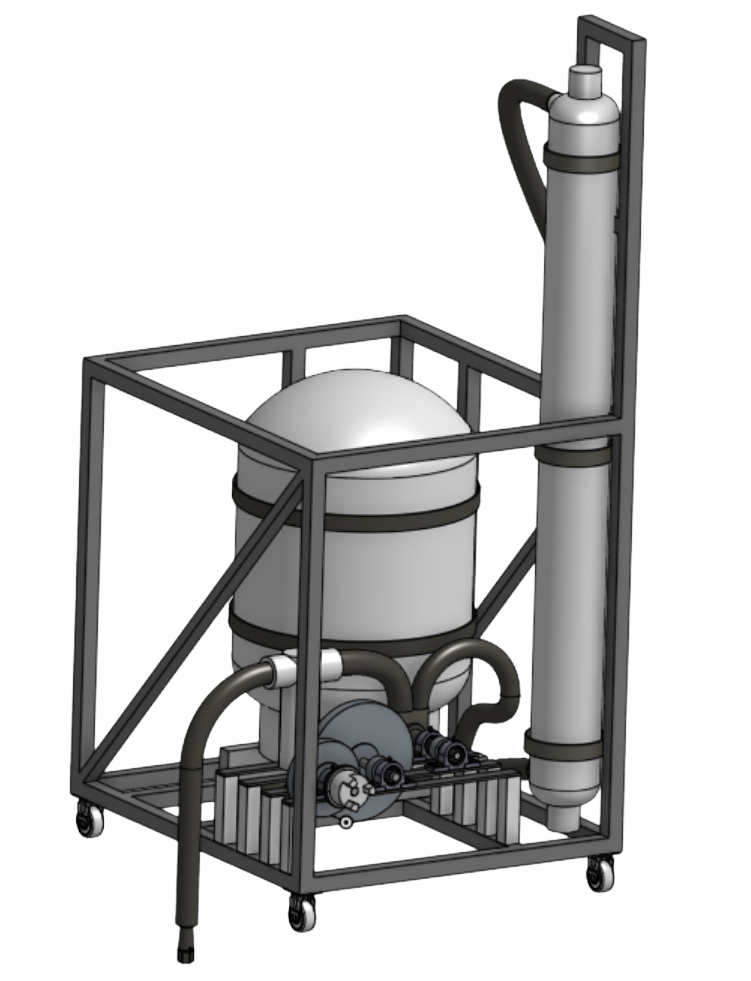
The design brief called for high-flow filtration from an unpressurized water source, a reusable filter, a one-way rotating input, and several minutes of output without continuous operator effort. Meeting these requirements meant integrating the fluid circuit, stored-energy system, drivetrain, and cart as one architecture.
My contribution
- Compared gravity-tower, pressure-tank, and direct-crank concepts against weighted performance and practical criteria.
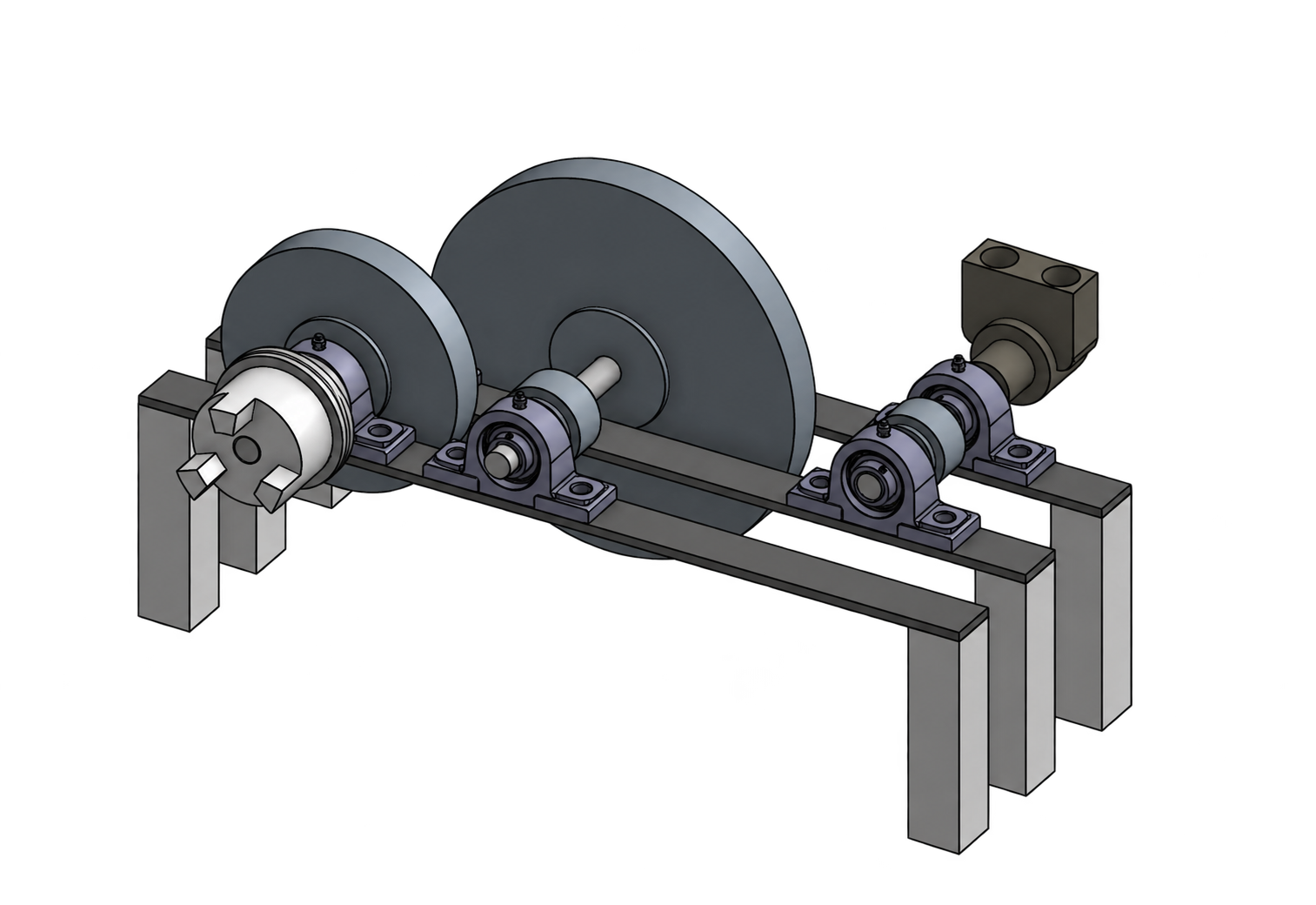
- Designed the cart’s hydraulic and mechanical architecture, including the one-way drive, belt stages, component packaging, and backwash path.
- Sized pressure storage, membrane flux, input power, torque, and the keyed shaft using documented calculations.
- Selected candidate components and prepared a frame concept, projected cost, and validation priorities.
Requirements that shape the design
Design development
Reject the gravity tower
Producing approximately 15 psi through hydrostatic head would require roughly 10.5 m of elevation, conflicting with the cart format.
Select pressure storage
The pressure-tank concept scored 4.40/5 in the decision matrix, compared with 3.60 for direct crank and 2.30 for gravity storage. It separates input effort from short periods of discharge.
Integrate the drivetrain and cart
A two-stage belt drive provides 15.27:1 speed-up, taking a nominal 70 RPM input to approximately 1,069 RPM. The tank and drivetrain sit low in the braced cart, while the vertical filter reduces footprint.
Engineering decisions
At the target flow, five minutes of output requires 50 L of usable water. The selected 44-gallon pressure tank’s listed 13.6-gallon drawdown corresponds to approximately 51.5 L, giving a calculated 5.15-minute discharge period. Tank volume and component ratings still need verification in the assembled system.
A 33 m² membrane area gives a required flux of approximately 18.2 L/m²/hr at 600 L/hr. At 50 psi, the target flow requires about 57.6 W of hydraulic power; the study estimates 120–180 W input after drivetrain and pump losses.
At 180 W and 70 RPM, nominal input torque is approximately 24.6 N·m. A 40 N·m design torque gives approximately 25.5 MPa torsional shear stress in a 20 mm solid shaft. The component architecture uses keyed interfaces and a one-way clutch to transmit torque and isolate backdrive.
Build & integration
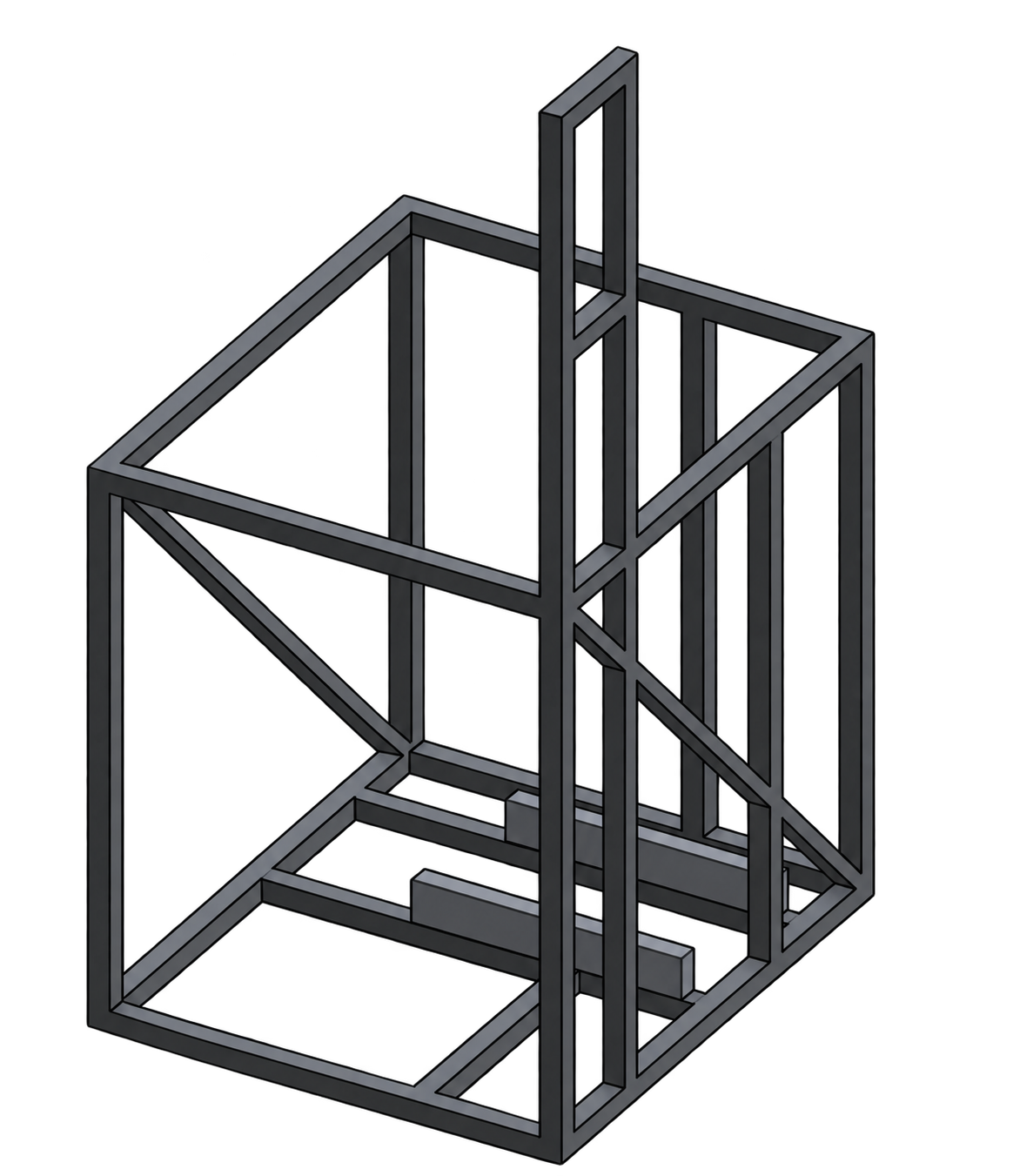
The proposed cart uses welded 1.5-inch square steel tubing, diagonal braces, locking casters, and removable restraints. A simplified frame calculation is a preliminary sizing check, not a verified structural safety margin.
The plumbing includes an intake strainer, grit prefilter, pump, check valve, pressure tank, regulator, membrane, and outlet. An external relief valve addresses the selected pump’s lack of internal relief; a separate backwash route sends clean reserve water through the membrane to a waste outlet.
The prototype budget is projected at approximately $5,500–$6,000. Manufacturing and physical assembly are still planned.
Validation
The presented results are analytical sizing and candidate-component comparisons. No measured throughput, discharge runtime, membrane recovery, or water-quality performance is claimed.
The validation plan must confirm the pump curve, suction behavior, full-circuit pressure losses, dirty-water tolerance, and backwash recovery. Dissolved contaminants and additional pathogen-treatment needs remain outside the demonstrated design scope.
Outcome
A documented mechanical architecture and CAD concept that connects requirements to pressure storage, membrane sizing, shaft design, and practical packaging. The calculated storage capacity supports the five-minute discharge target, subject to prototype verification.
Next iteration
Build and test the hydraulic circuit, verify actual pressure losses and flow, characterize membrane fouling and backwash recovery, and reduce component size and cart mass.